
• About
    • Mission & Vision
    • Our Leadership
    • ADF: A Druid Fellowship
    • Photos
  • Services
  • Calendar
  • Resources & Social Justice
  • Membership
  • Blogs
    • Prairie Tidings (Church Blog)
    • Rev. Badger's 2019 Stoic Blog
    • The Practical Bard (Rev. Missy's Blog)
    • Little Druid on the Prairie (Rev. Lauren's Blog)
  • Policies
  • Contact Us
  • About
    • Mission & Vision
    • Our Leadership
    • ADF: A Druid Fellowship
    • Photos
  • Services
  • Calendar
  • Resources & Social Justice
  • Membership
  • Blogs
    • Prairie Tidings (Church Blog)
    • Rev. Badger's 2019 Stoic Blog
    • The Practical Bard (Rev. Missy's Blog)
    • Little Druid on the Prairie (Rev. Lauren's Blog)
  • Policies
  • Contact Us
Mountain Ancestors Grove, ADF

A Year of Contemplation

Living Without Restriction (Day 70)

3/11/2019

 
Picture
Image Credit: Pixabay

Is “living without restriction” even possible? I mean, sure we could… but depending on what specific unrestricted actions we’d perform, well… there could be consequences. Heck, I suppose there’s always consequences, leaving value judgements out of it.  

But what is it that we’re talking about here? Holiday offers an exercise: consider a person who is ultra wealthy, or incredibly famous. Next, take away the trappings of wealth (big homes, luxury cars, gilded plumbing, piles of cash and coin so tall that we can barely see over them)... now, look at the person who remains. Hold them in the mind’s eye, as well as in our hearts. Experience the person that remains after the finery has been removed. Finally, answer the questions below:

What did this person have to “pay” to receive the trappings of wealth? What was traded for money and fame? Is your person STILL paying into that deal? Is the exchange rate too high? 

It’ll be nigh-impossible to find a scenario where one isn’t continually paying-into (some would say “investing”) growing one’s fame and wealth. There’s always a cost. 

The United States’ idea of success is irrevocably linked to money and finances, as is much of the “western” world, so it might seem that trading bits of ourselves, or happiness, our sanity, our integrity for money is perfectly normal. 

We’re restricted in our lives if our masters are fame and wealth. 

We wouldn’t be free. 

We’d be imprisoned, like Seneca says, “... under marble and gold.”

Are we even aware of our cage... or that we're paying to be housed in it? 

(See y’all tomorrow) 

Find Yourself a Cato (Day 69)

3/8/2019

 
We can remove most sins if we have a witness standing by as we are about to go wrong. The soul should have someone it can respect, by whose example it can make its inner sanctum more inviolable. Happy is the person who can improve others, not only when present, but even when in their thoughts!”
​ (Seneca, Moral Letters, 11.9)

​Part of awareness training is to be aware that we need upstanding people to model ourselves after. Folx who show us how we CAN be. Examples and guides for living the good life (not the life of luxury, per se). 

Are these people heroes? Are they mentors? Maybe. 

I see them more as simple models of how we’d like to live. Someone to keep us on track. A person to look to when we need to be better than the summary of our fears in the moment. 

Find someone. Remember, they’re human, and one thing to look in your learning from them… is how they model forgiveness and healing. 

Now, take that exemplar and have them at your side all the time, like Seneca advises.

Better yet, make it a REAL person instead of a person from history, long gone. 

It’s less likely we’ll screw up if there’s someone with us, checking and balancing. 

Get your own Cato… and be a Cato for someone else. 

(See y’all tomorrow)

Find the Right Scene (Day 68)

3/8/2019

 
Picture
Image Credit: Pixabay

There exists a term in Hindu philosophy that means: the act of the whole of reality, including Cosmos, constantly dissolving and becoming through the improv-play of divinity (immanent, transcendent, and/or otherwise) with itself. That concept is called Maha Lila, or “great, divine play”. 

Nutshell version: it’s the sacred, transcendent, make-believe, reality-building playtime; however, as expansive and possibility-ridden as this might sound, it still has boundaries. 

In any form of play, roles have to be known and boundaries set… otherwise one might end up with a NASCAR race right through the middle of a football game. Knowing who we are, what we want to do, AND what supporting characters we want to do it with is crucial to our being the most-excellent “player” (read as *aware human being*) during playtime (read as *the one lifetime we’re given*). 

Even though this all sounds very joyful, as aware adults, we have to remain mindful that not everyone plays nice, or is nice to play with. Part of finding the right “scene” in the play is found in the sharing of the scene with the right people. 

Not everyone is good for us. 

So, to that end, we cull the herd. We trim the “friends” list. We make room for our own liberation. 

Sometimes; however, we feel that we’re meant for greater things, and maybe part of our “right scene” is the liberation and salvation of others… those who we’d otherwise cull from our scene.  Believing we can “save” people, or that there is a special part for everyone to play - at all times, in every moment, in every way - is our ego telling us that we’d be “better people” if we save others. It’s what I’m gonna call messianic self-aggrandizement. 

Unless we want to become martyrs (which is a completely different ego-neurosis), we must first save ourselves. Remember, get the oxygen mask on ourselves BEFORE helping those around us. Finding the right scene and right co-players IS saving ourselves. The right people around us can be that salvation. 

We choose to put ourselves in certain “scenes” in life. Who are the other characters on stage with us at any given moment? How do they affect us? Why? 

(See y’all tomorrow)

Don’t Unintentionally Hand Over Your Freedom (Day 67)

3/8/2019

 
If a person gave away your body to some passerby, you’d be furious. Yet you hand over your mind to anyone who comes along, so they may abuse you, leaving it disturbed and troubled - have you no shame in that?”
(Epictetus, Enchiridion, 28)

Imagine someone were coming to take us away. We’d put up a struggle, yeah? Shit, I would, that’s for sure. Might not be the epic battle I’d hope for, but I’d fight back. Most of us would. We wouldn’t just mindlessly give up, ignorant to our situation. No, we’d defend ourselves and our inalienable human right to be free. 

We’re all about defending ourselves. It’s big business, and whole subcultures are built around the self-protection ethos. Speaking only for myself, I’ve studied various European and Asian armed and unarmed systems of martial arts, acquired some mechanical and tactical skill with firearms, and am currently working on my concealed carry licensure. 

The spirit of molon labe (Greek for “come and take them”) is rich in the American spirit… 

… but what about our minds? 

Like was mentioned above, there are a boatload of self-defense trainings and options to protect the body, but none of those things offer self-defense solutions for our minds. However, it’s not only defense I’m talking about… but surrendering without a fight because we’re unaware that our mental-lives are in danger. 

Reruns of reruns of reruns. Binge television. Social media. Thoughts and opinions of others (theirs about us, and ours about them). “Rabbit hole” internet journeys. If we don’t see those things as dangers to our mental-lives, we desperately need to reevaluate the nature of those things. 

Let’s say that we set aside time to foster serenity and peace, for ourselves, and with our loved ones… the phone still comes out at the dinner table… judgements of others (or of self) continue to fill our minds while walking through a beautiful park… the “enemy” is insidious. What could we be in those moments if we weren’t handing our freedom of agency over?

Before blame arises, remember that this is something we do to ourselves. It’s not the fault of our phones, or the internet, or the other guy… no, it’s ours. 

If all sorts of terrible things can befall the body, through no control of our own, then the mind is the last vestige of self-determination and personal freedom that we have. We must protect and defend our minds.

​No banter, no barter, no quarter. 

(See y’all tomorrow)

Don’t Trust the Senses (Day 66)

3/7/2019

 
Picture
Image Credit: Pixabay

​We practice awareness to tune ourselves in to reality and cosmos, untainted by ego-rooted opinions and emotion-linked decisions. In self-awareness practice, we seek to know our own habituated thoughts, feelings, and actions… and once known, to navigate our inner and outer experience in such a way that we are not affected by ourSELVES. 

With the subject of today’s contemplation, I’m left asking myself: 

With what senses to we perceive mind and spirit? 

How do we utilize senses designed to intake data from beyond ourselves? We cannot. 

Heraclitus called self-deception an awful disease and eyesight a lying sense” 
(Diogenes Laertius, Lives of the Eminent Philosophers, 9.7)

We can’t trust our standard-issue senses to come to a place of self-knowledge and self-awareness: Why? On one hand because they’re external, and on another because we have egoic opinions on every bit of data we intake from those senses. We don’t just *sense* the *thing*. We have thoughts and feelings about the *thing*, whether we want to accept that or not. They’re there. Subtly. Running deep in the untrained subroutines of the mind. 

However, there is a way to short-circuit the habitual patterns of unconscious living. 

Take a pause, then a breath. Feel it leave your body. 

Practice patience; the same kind needed to see the ripples in a pond come to stillness again. 

Awareness is a tricky business, but like Heraclitus said, self-deception is an “awful disease”. 

May we have what it takes to seek the cure in perpetuity. 

(See y’all tomorrow) 

Don’t Tell Yourself Stories (Day 65)

3/6/2019

 
Picture
Image Credit: Pixabay

In my work as a full-time pastor for our church, I’m lucky enough to hear so many stories from so many people, all the time. Over the course of time, I come across a LOT of reruns of people’s stories, and just like that episode of your favorite program, we remember all the inflections, details, and timing. I’m not talking about hearing reoccuring themes in the human experience. I’m talkin’ about the same people telling the same stories. 

The SAME stories. It’s like they’re performing for an audience, and every chance they get to preform, at best, they get the chance to improve the theatrics, or at worst, they’re not being present and simply hitting the autoplay button. 

In public avoid talking often and excessively about your accomplishments and dangers, for however much you enjoy recounting your dangers, it’s not so pleasant for others to hear about your affairs.”
(Epictetus, Enchiridion, 33.14)

It’s gratifying to tell the tales of our accomplishments that highlight our talents, however, when those talents come to define our identity, and those accomplishments are linked to our worth, then those stories arise from a place of ego. 

Being with other people presents us with the opportunity to practice “relationshipping”. Like Ryan Holiday says, we must strive to, “... listen and connect with people, (not) perform for them.” (The Daily Stoic, p.76)

(See y'all tomorrow)

Cutting Back on the Costly (Day 64)

3/5/2019

 
What’s the cost of accumulating? Of acquiring? Hanging on to? Hoarding? 

We rarely ask ourselves if we actually need the things we’re schlepping around; these superfluous trinkets and “ancestral” pieces, hanging onto us like millstones around our necks (Matthew 18:6). What’s all that shit worth? Like, it’s ACTUAL worth. What’s it costing us? 

In a culture that measures success and happiness on how big one’s home is, how much stuff one has, what KIND of stuff one has, and the volume of resources or capital one has, it’s almost inevitable that members of the aforementioned culture would be more susceptible to remaining ignorant to the insidious price for connecting their worth and identity to the material.

Awareness leads to elegance and simplicity, and the ability to create cosmos from chaos. 

Time to have a Garage-Sale-for-the-Soul. Free up those internal resources bound up in all the stuff. Reclaim power. 

(See y’all tomorrow)

Awareness is Freedom (Day 63)

3/4/2019

 
Today’s theme brings to mind images of Plato’s Allegory of the Cave: the more aware the hero became of truth and reality, the more “free” they became. 

If we take the externalized allegory from Plato and turn its lens of awareness within, toward our internal processes and motivations, we can see the deceptive nature of our egoic desires, the shadowy reality of selfishness. 

Even though this all that shadow and deception sounds nefarious, the “freedom” model doesn’t only apply to the obviously detrimental. No, not at all. Sometimes we’re trapped in a Virtue-shaped prison, unaware that we’re lying to ourselves… unaware that we’re weaponizing Virtues because we’re trapped in ego’s desire to be right… unaware that we’re ignoring moderation, and going overboard, causing self harm, because playing the martyr quietly strokes our ego like the cat of a super-villain. 

The more aware we are of the subtle, insidious ways that we get in our own way, the more free we can actually be…

… and after all, who would not want to be free if they saw “The Cave” for what it was? 

(See y’all tomorrow)

(Dis)integration (Day 62)

3/3/2019

 
Picture
Image Credit: Pixabay

When I read the title of today’s reading, I laughed to myself, as it sounds very typical of the etymological “woke” jargon of my alma mater, Naropa University, not to mention Boulder county, itself. 

Regardless of what this Naropoid thinks, the idea we’re examining today is “internal integration”, according to Ryan Holiday. 

Since we’re making this up as we go, I offer (in other words, I make up) that the definition of internal integration is: a holistic unifying of independent, beneficial parts (illusory or actual) of our mental and spiritual landscape. In other words, constantly working to experience the forest as a forest… and not a bunch of individual trees vying for our attention. 

Perhaps, though, trees are not the right metaphor? Perhaps the importance of remaining ignorant to the forces at the root of our mindless desires and illogical fears, forces that could tear us apart, cannot be conveyed by gentle tree imagery?

If I’m interpreting this lesson correctly, what I’m seeing is us, as individuals, at the center of a multi-player tug-o-war. With rope attached to one of our legs, one desire pulls one way. Another, attached to one of our arms, pulls in a different direction. Tied to our neck, one fear pulls us opposite of another fear, tied to our once-free arm. 

Holidays says that, “We can’t live as both Jekyll AND Hyde. Not for long, anyway.” (The Daily Stoic, p 73). He’s right… but it’s worse than just reconciling between two sides. It’s multi-faceted, and well beyond a binary. 

Epictetus counsels us to, “... stand with the philosopher, or else with the mob.” (Discourses, 3.15.13) As the “master of my fate” and “captain of my soul” (Henley, Invictus), I’ll either be the kind of captain making decisions from a holistic, mutually beneficial, healthy, Courageous space… or the kind who bends to the whims of the desirous individual, or worse, the unaware mob. 

With awareness, we set sail. 

(See y’all tomorrow)

Accurate Self-Assessment (Day 61)

3/2/2019

 
Picture
Image Credit: GCSSD

​If you’ve found your way to my blog, I’m sure you already know I’m a religious person. So religious in fact, that I have pursued my vocation for a lifetime, and serve my community as an ordained person. I know the power religion has to affect one’s life. I’ve seen religion switch on the “a-ha” light in dozens of people when their confusion turns to clarity. Religion is a powerful tool to help one know one’s role in the great-play of life. 

In addition to helping us know our roles, religion is supposed to help us tune in to a more complex cosmos, make sense of things that would otherwise be difficult to understand, and become aware of things that perhaps, without religion, we’d remain ignorant of. 

In short, I’ve invested a lot of my life, time, talents, treasure, and spirit in the multifaceted strength of religion… because when done in healthy ways, religion is helpful. 

However, religions without firm boundaries or virtue expectations, like most expressions of American-neopaganism, are the plots of fertile ground wherein self-delusion is grown. 

Feel-good techniques (as opposed to BE-good techniques), fallacious affirmations in the face of shortcomings, overblown opinions of our own talents, blaming failures on spirits or ancestors or divine beings… all of the above do not allow for an accurate self-assessment. 

Above all, it is necessary for a person to have a true self-estimate, for we commonly think we can do more than we really can.”
(Seneca, On Tranquility of Mind, 5.2)

​Overestimating our talents, abilities, and skills gets us into as much shit as does underestimating them. 

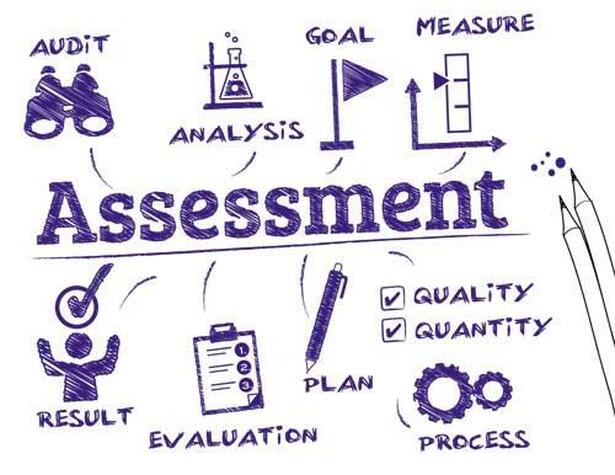
Psychologically speaking, self-assessment is the process of examining oneself in order to assess personality-elements that are crucial to one's identity. It’s one of the motives that drives us toward self-verification and self-enhancement. 

We train our minds and spirits that our accurate self-assessment skills can courageously process our uncertainties instead over-committing on further solidifying our certainties. The self-assessment process is, by far, more interested in the accuracy of our current self-view, and not on improving our current self-view. 

The practice of accurate self-assessment is NOT about bolstering one’s self-esteem. 

It’s about a clean, clear awareness of where we are internally and externally. It’s about finding the “You Are Here” sticker on the mall directory… and not value-judging your placement in the mall. 

(See y’all tomorrow)
<<Previous
Forward>>

    About the Blog

    Awakening the desire to explore Stoicism, and how it relates to his existing beliefs, Rev. William committed to working through the text, The Daily Stoic, a year-long journey to awaken the Stoic mind. 
    How things are structured can be found in the first post. 

    About the Author

    Born and raised in New Orleans, Louisiana, Rev. William attended Naropa University in Boulder, Colorado where in 2007 he graduated with a degree in Religious Studies, minoring in Psychology. Currently residing in Longmont, CO, he is one of the Priests and founder of Mountain Ancestors Grove.  He spends his time playing mandolin (and some guitar), writing, engaging in LGBTQIA+ advocacy and education, community service, and sharing a larger vision of how a polytheist perspective can lead to greater human understanding, acceptance, and gods be good, peace. 

    Archives

    January 2020
    December 2019
    November 2019
    October 2019
    September 2019
    August 2019
    July 2019
    June 2019
    May 2019
    April 2019
    March 2019
    February 2019
    January 2019
    December 2018

    Categories

    All

    RSS Feed

Powered by Create your own unique website with customizable templates.